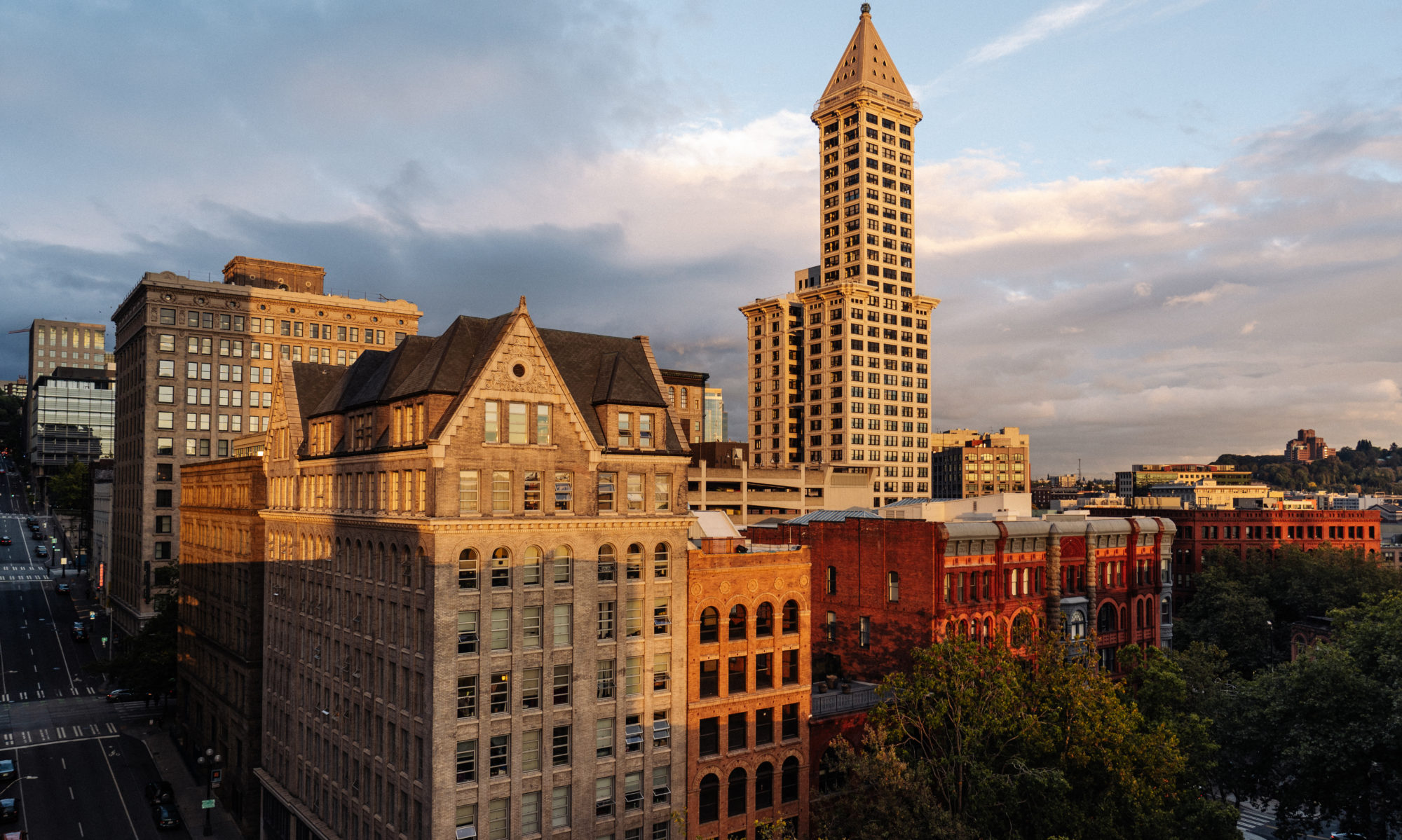

Tija Petrovich vividly remembers riding out the Nisqually Earthquake in Pioneer Square 25 years ago.
She was working in the fitness gym she owned on First Avenue when the shaking started on Feb. 28, 2001 at 10:54 a.m. and she knew what to do. She had been trained in school earthquake drills following the 1965 Seattle quake.
Tija was in her office at the gym where members were training, taking showers, and working with staff. She rushed out of her office and told the front desk staff to get under the desk.
“Then a parade of naked men began running out of the locker room showers, and we started throwing them towels to cover up,” she said.
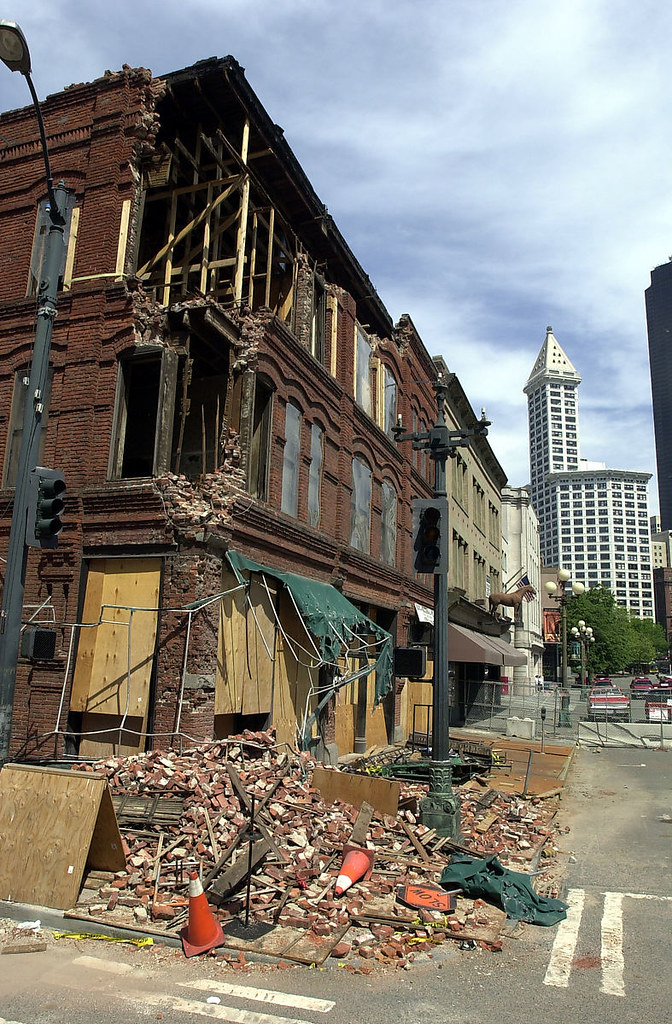
She told everyone to stay where they were until the shaking stopped and then she ran up the stairwell to the upper floor where trainers were working with clients. As she ran up the stairs, she looked out the window across First Avenue. She saw the façade of a building had collapsed and she saw someone sitting in their office with no wall in front of them.
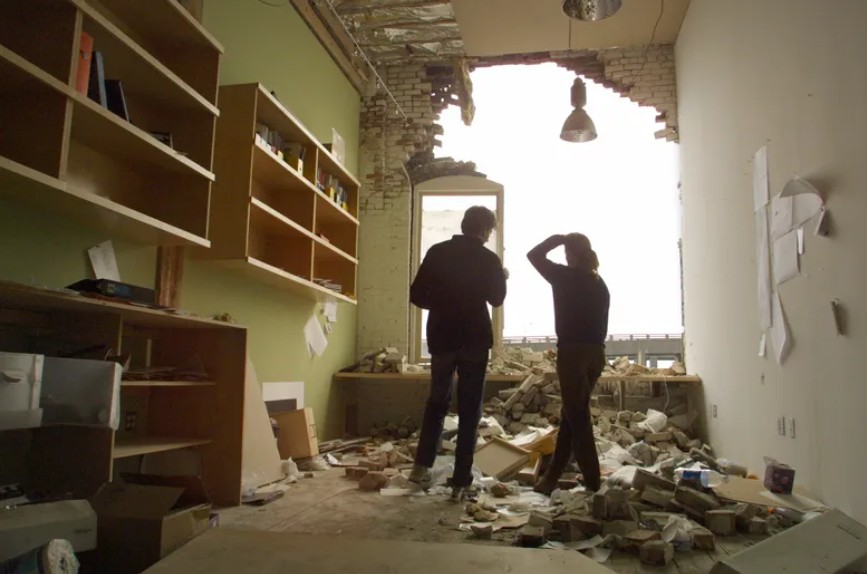
Once the shaking stopped she told everyone to get out as quickly as possible and then made sure the gym was empty. She found her staff outside, standing under the viaduct. She urged them to move out from under the viaduct, fearing aftershocks could bring it down on top of them.
“I didn’t know where liquifaction might occur, so I didn’t want them to go stand over by the stadiums either,” she said. “Everyone seemed to be in shock. Some were very frightened and they wanted to go home.”
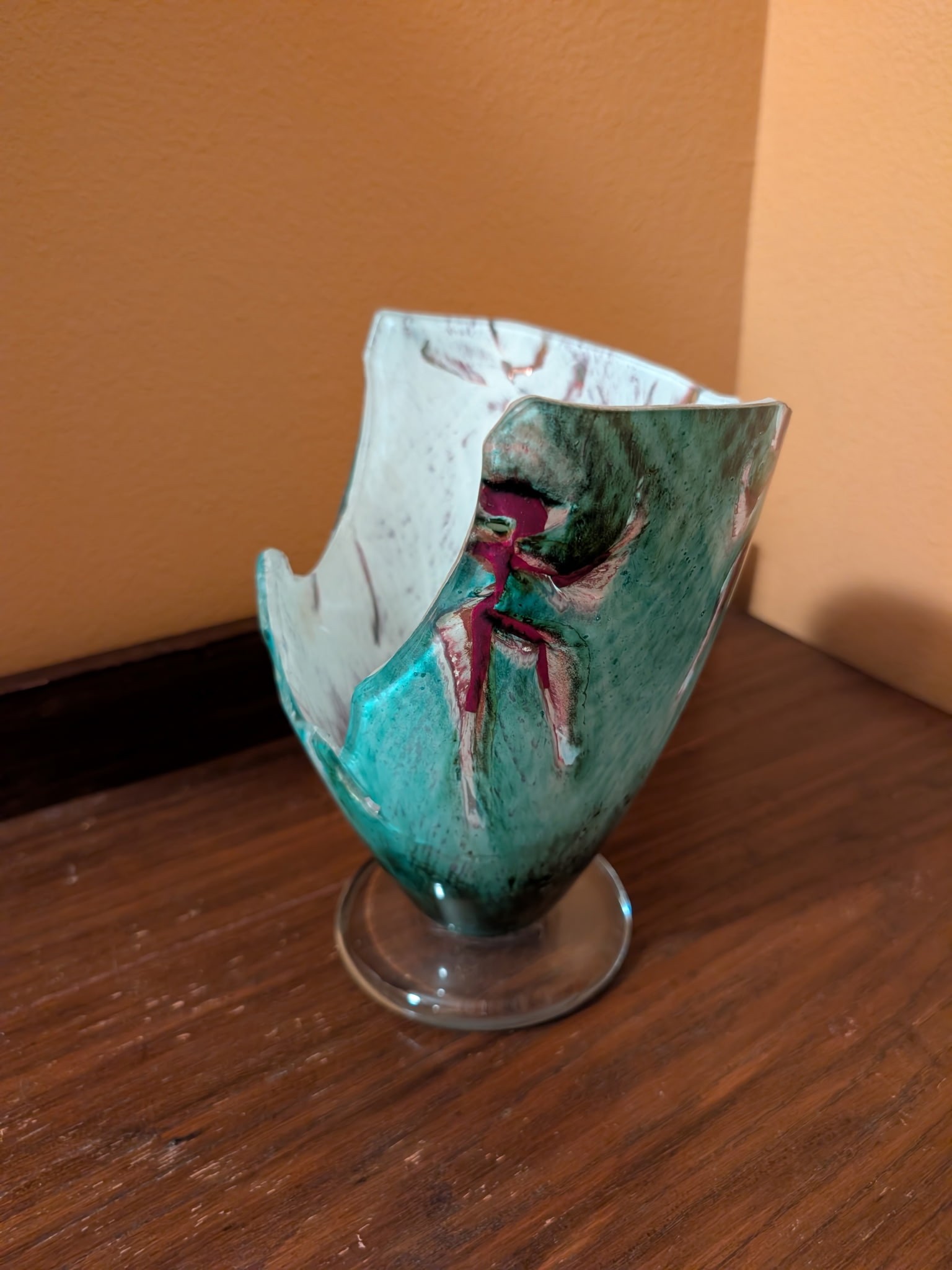
Tija was allowed to get back into her Pioneer Square condo the next day to assess the damage. Glass littered her condo floor but she was relieved that there was not more serious damage. And she remembers how beautiful it was with the sun shining on it when they were allowed to get back inside, reflecting her gratitude that no one was seriously hurt or killed. She kept some of the glass (pictured at left) to remind her that there is always the possibility of another earthquake.
She encourages everyone to invest in a grab-and-go kit and keep it handy, identify an out-of-state contact to communicate with family and friends, and have a plan for where you will live if your home is inhabitable.
Tija is grateful that the building where she lived and the building housing her business were both retrofitted and reinforced to withstand earthquakes.
“Unreinforced masonry is frightening,” she said. “I feel we missed a giant bullet then, thank goodness.”
The City of Seattle has implemented a 50% reduction in permit and plan review fees for projects that help to seismically retrofit unreinforced masonry buildings according to code.
The SDCI Building Connections Newsletter has an article summarizing these changes and the progress toward improving access to and affordability of retrofits. One study shows that every $1 invested in seismic retrofitting saves $13 in future losses, including avoided damage, emergency response costs, displacement, and business interruption.